Smart City and Lighting Systems
ArtNet & DMX, RDM, and SPI Solutions for LED Lighting Control
Zenopix offers professional solutions for your ArtNet and DMX projects with LED lighting control devices.
Zenopix: Smart control solutions for LED manufacturers
Particularly with its ArtNet and DMX-supported solutions, Zenopix offers high performance at global standards. Furthermore, this hardware facilitates management thanks to its user-friendly interfaces. Therefore, you can ensure full control over your projects with our efficiency-enhancing technologies.
Advanced R&D Capability
It possesses the capability to develop hardware and software for lighting control systems.
Art-Net, DMX, RDM, SPI
It offers controllers, converters, and master devices for professional projects.
Software-Based Control
It provides user-friendly software for pixel animation and RDM device management.
Flexible Project Support
With our customizable infrastructure, we offer full project support across all device types.
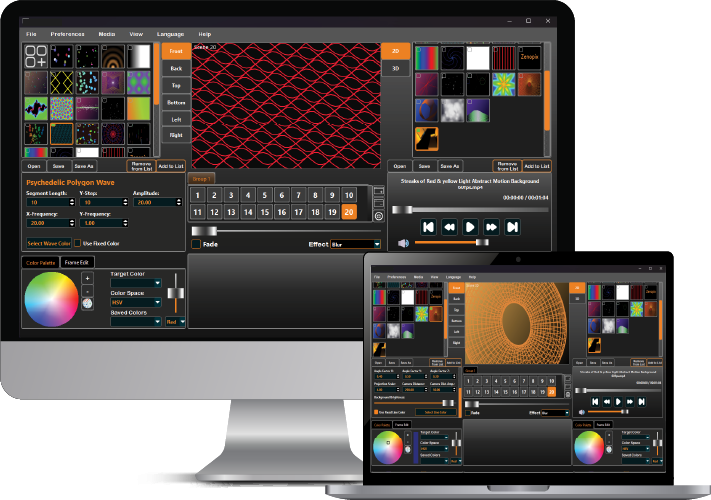
ArtNet control is now much easier with NEO V2
Combining ArtNet and DMX protocols into a single interface, Zenopix NEO provides complete control over lighting architectures. For instance, you can record complex animations and model your projects in a digital environment. Consequently, you can easily optimize the entire process.
Current Software Technologies in 2D and 3D Animations
User-Friendly Interface in Pixel Mapping
Simultaneous Synchronized Animations with Music
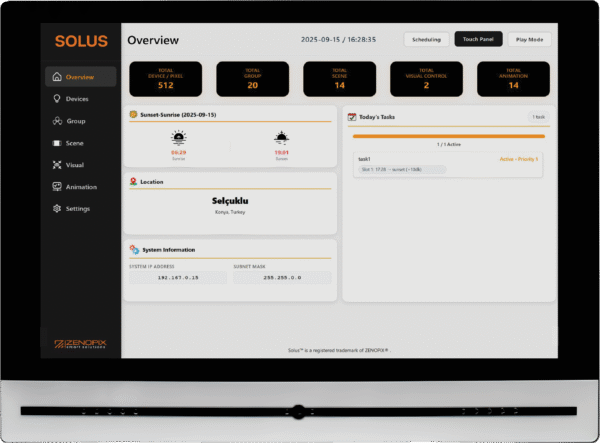
Solus Touch Panel ArtNet Master Controller
Solus Touch Panel is a touch-based hub that manages all pixels in real time. In particular, you can visualize your projects instantly and control your devices on a group basis. Furthermore, its user-friendly interface brings complex scenarios to life within seconds. As a result, you achieve complete control and efficiency in your professional projects.


Our References
Our references are a testament to our successfully completed projects.
Astana Independence Palace
In this project, a 4-channel constant voltage Zenopix RDM/DMX decoder and a Zenopix RDM/DMX addresser were used.
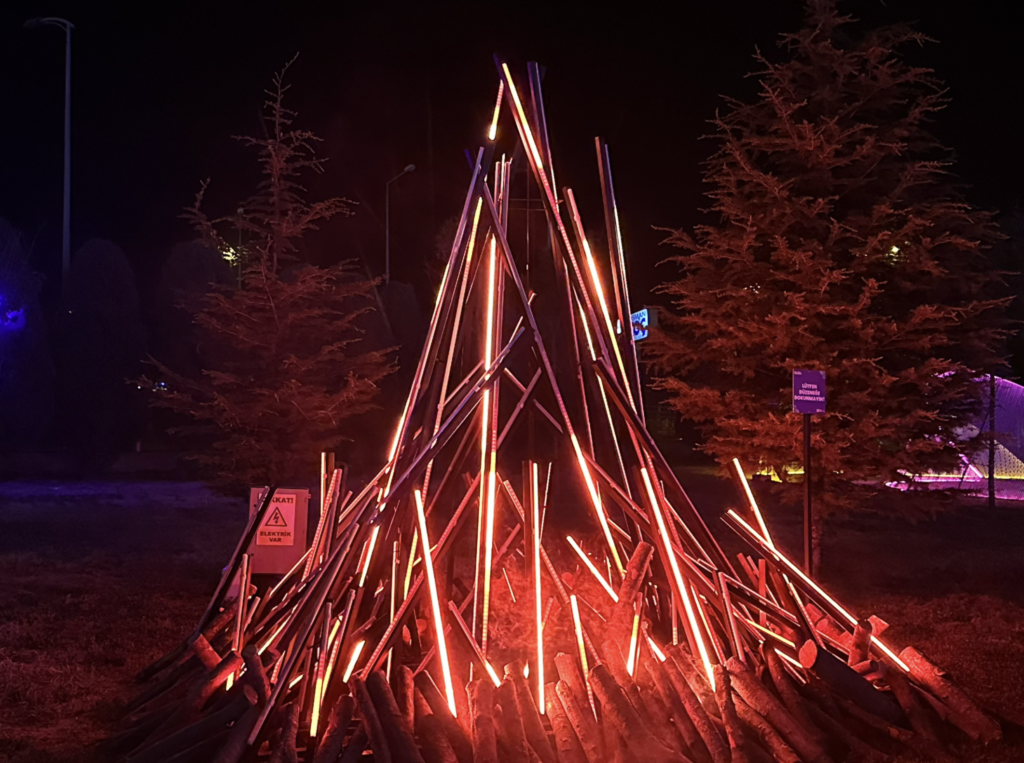
Science Festival Pathway
In this project, the Zenopix AER 8 DMX / SPI Master Controller was used in conjunction with Zenopix NEO software.
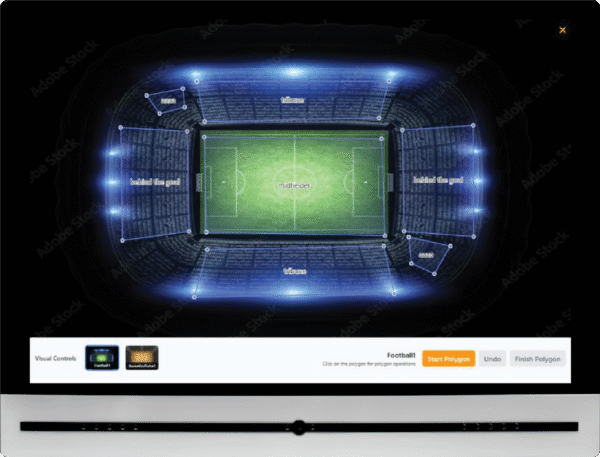
Lucoil Iconic Stadium
In this project, a 4-channel constant voltage Zenopix RDM/DMX decoder and a Zenopix RDM/DMX addresser were used.
Frequently Asked Questions About the NEO Software Audio Feature
To activate the audio connection, simply click on the switch located in the middle-bottom section of the main screen to enable it. The application listens to your computer and synchronizes the animations with the sounds.
In the customized integration unique to each animation, the intensities of low, medium, and high audio frequencies are utilized. These values can be controlled from the “Audio” screens in the bottom-right and bottom-left menus on the main screen, and their effects on the animation can be adjusted.
As of version v2.1rv010, the audio file uploading and playback feature is not available. This feature has been planned and has entered the integration process. Until the new version is launched, the audio feature is limited only to desktop listening.
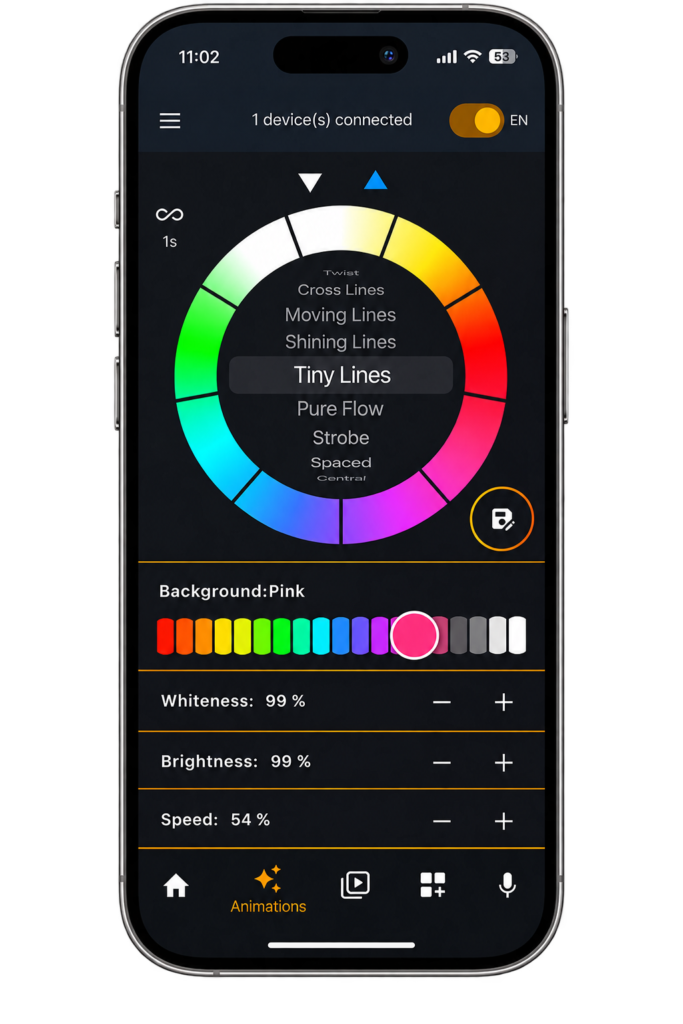
Zenopix Felix Application
Bluetooth BLE Connection & Device Management
- Wireless Bluetooth Low Energy connection to Zenopix LED devices Scanning, discovering, and managing multiple devices Device configuration (name, MAC address, etc.)
Dynamic LED Animations
- 25 built-in animation algorithms for use in Zenopix devices Uploading and playing your own animation files (on devices with SD card support) Animation speed, repeat count, and loop control
Sound-Reactive Effects (Audio-Reactive)
- Real-time LED effects reacting to microphone input Phone microphone, device microphone, or AUX input options Precise control with sensitivity adjustment
Multi-LED Mode Support
- The application provides full compatibility and flexible mode support for various LED chip configurations, including RGBW, RGB, Tunable White (Adjustable Light Temperature), RGBWC, and more. It features user-friendly interface elements, such as color slider controls tailored for each mode, allowing users to easily adjust color tones. Additionally, it offers precise control over the light intensity, color saturation, and white balance of the fixtures through dedicated brightness, color, and white level adjustments.